
Group 01
5th – 6th Grade
14 Enrolled · Ages 10–12
Fundamentals year. Hitting mechanics, throwing motion, footwork. Math + reading two periods a day with our credentialed teacher.
Tour Group 01 →Same sections in all five (Masthead · Cover · 3 Groups · Honor Roll · Classroom · Facility). Different aesthetic per variation. All photos are 4K web-sourced — placeholders until Tony provides real shots.
Best viewed on desktop · each preview is a 1280px browser frame
Cinematic editorial — Playfair masthead, brass-and-cyan accents, asymmetric photo grids. Magazine layout you've seen before.

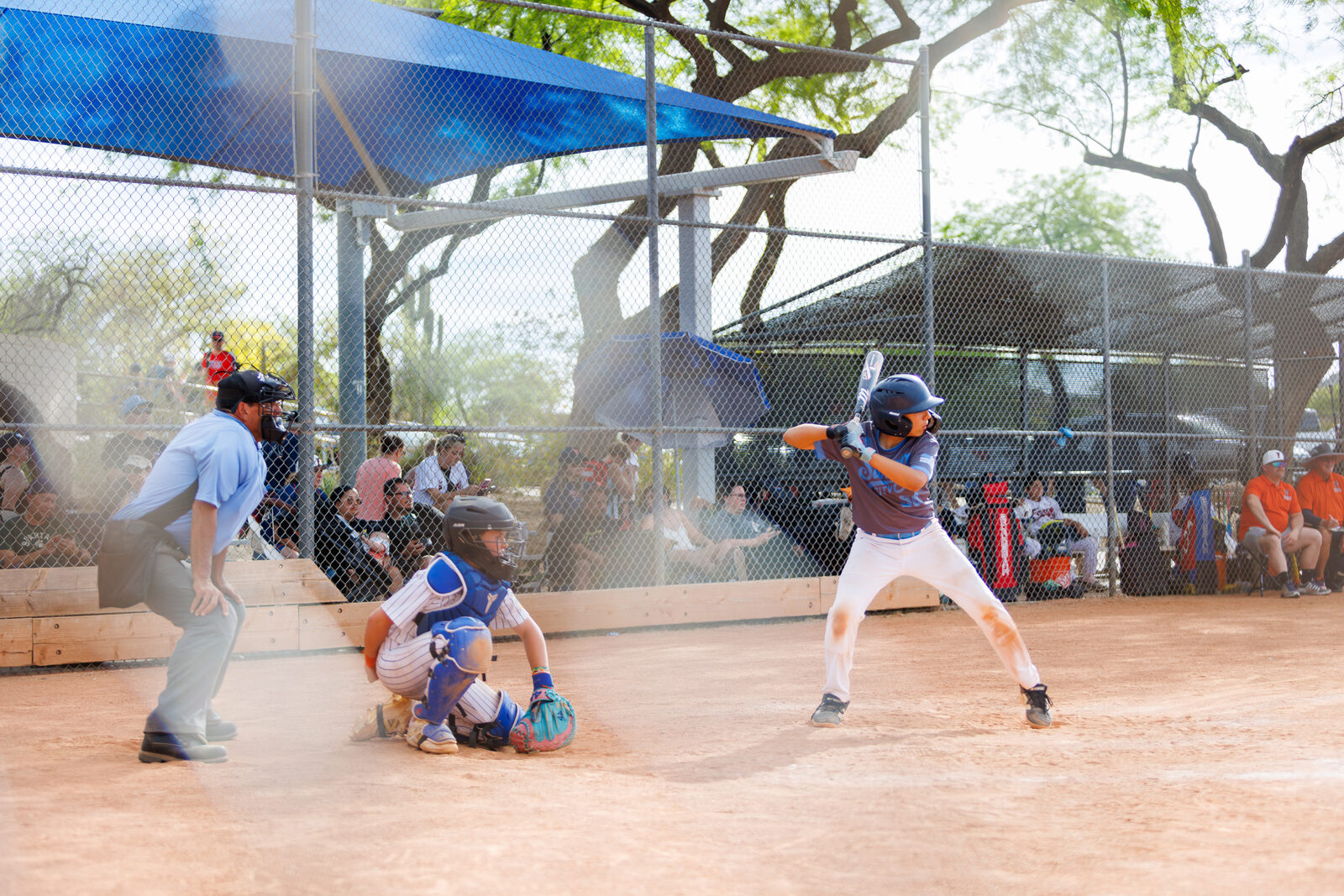 Photo · The Cage, Lane 04
14 pro cages. HitTrax simulator on-site. 20,000 square feet of grit, reps, and game-speed teaching — open every day in Temecula. This is what spring at Swing City Academy looks like.
Grouped by school grade. Each group rotates through baseball, classroom, and strength every day.
Fundamentals year. Hitting mechanics, throwing motion, footwork. Math + reading two periods a day with our credentialed teacher.
Tour Group 01 →
Skill year. HitTrax data introduced, position specialization begins. Algebra prep, science labs, writing every day.
Tour Group 02 →
Showcase year. Rapsodo, video review, position-specific training. High-school-prep academics with HS-level math + lab science.
Tour Group 03 →Students recognized this quarter for academic excellence, character, and effort. Every name earned its spot.

"Quietest leader we've had. Never asks for praise, gets the work done every time." — Coach Rivera

"Math competition team. First Group-03 student to clear 75 mph exit velo." — Coach Reyes

"Reads at 8th-grade level. Picks up new pitches faster than kids three years older." — Coach Tony

"Reorganized the equipment room without being asked. Showed up at 6 AM to set up bullpen." — Coach Tony

"From not-able-to-throw-a-strike in September to closing out the spring scrimmage." — Coach Rivera

"Writing teacher says he's the best 8th-grade essayist she's had in 12 years." — Ms. Trent
Half the day at the desk, half at the plate. Credentialed teachers, individualized math, daily writing, lab science.


Five dedicated training programs, every one staffed by a coach Tony hand-picked.

Age-banded strength program. Squat-pattern, hinge, pull, push — the four lifts everyone learns. Built around growth-plate-safe loading.

Velocity, spin rate, break angle — every pitch tracked. Athletes see their own data in real time.

Ladder drills, lateral resistance, 60-yard timing. Twice-weekly turf sessions for every group.

Infield reads, outfield routes, double-play turns. Pop-flies under the lights every Thursday.

Three head hitting coaches. HitTrax-tracked sessions, individual swing video reviewed weekly.
LCD-yellow ticker accents, scoreboard digits for enrollment, "ON AIR" framing. Sports-broadcast/scoreboard feel.
Grouped by school grade. Each group rotates through baseball, classroom, and strength every day.
Fundamentals year. Hitting mechanics, throwing motion, footwork. Math + reading two periods a day with our credentialed teacher.
Skill year. HitTrax data introduced, position specialization begins. Algebra prep, science labs, writing every day.
Showcase year. Rapsodo, video review, position-specific training. High-school-prep academics with HS-level math + lab science.
Students recognized this quarter for academic excellence, character, and effort. Every name earned its spot.

“Quietest leader we've had. Never asks for praise, gets the work done every time.” — Coach Rivera

“Math competition team. First Group-03 student to clear 75 mph exit velo.” — Coach Reyes

“Reads at 8th-grade level. Picks up new pitches faster than kids three years older.” — Coach Tony

“Reorganized the equipment room without being asked. Showed up at 6 AM to set up bullpen.” — Coach Tony

“From not-able-to-throw-a-strike in September to closing out the spring scrimmage.” — Coach Rivera

“Writing teacher says he's the best 8th-grade essayist she's had in 12 years.” — Ms. Trent
Half the day at the desk, half at the plate. Credentialed teachers, individualized math, daily writing, lab science.
Five dedicated training programs, every one staffed by a coach Tony hand-picked.
Age-banded strength. Squat, hinge, pull, push — growth-plate-safe loading.
Velocity, spin rate, break — every pitch tracked, displayed in real time.
Ladder drills, lateral resistance, 60-yard timing. Twice-weekly turf.
Infield reads, outfield routes, double-play turns. Pop-flies under lights.
Three head hitting coaches. HitTrax-tracked, video reviewed weekly.
Cream paper, ink + vermilion, printed-album feel. Honor roll as a real yearbook spread. Laurel sprigs everywhere.
Forty-three students. Three groups. One roof in Temecula. These are the pages of our year — printed, not posted.
We built this academy the way our grandfathers built ballparks — by hand, by reps, by showing up before the lights came on. Fourteen pro cages. A HitTrax simulator on the wall. Twenty-thousand square feet of grit, lined paper, and chalk dust. The kids who walk through these doors get coached on hitting, on hand-writing, and on how to look an adult in the eye when they shake hands.
This is the third edition of the Swing City yearbook. The names are real. The grades are real. The exit-velo numbers, the GPA bumps, the hand-written essays under the magnet on the equipment-room fridge — all of it, real. Turn the page.
Grouped by grade. Each group rotates daily through baseball, classroom, and strength — printed below in order of seniority.
Our youngest cohort. Fundamentals year — hitting mechanics, throwing motion, footwork, eye contact. Math and reading two periods a day under our credentialed teacher, Ms. Trent, who taught seven years in Murrieta before joining us. They learn the box score before they learn how to keep one.
The middle cohort — and the heart of our program. Skill year. HitTrax data introduced. Position specialization begins. Algebra prep, daily writing, and science labs that include real glassware, not worksheets. By spring quarter their box scores tell us as much about their study habits as their swings do.
Showcase year. Rapsodo data, video review, position-specific training under Coach Tony. High-school-prep academics with HS-level math and lab science. These are the seniors of our middle-school program — the ones who set the tone for everyone walking through the front door.
Half the day at the desk, half at the plate. These pages were photographed by parents on tour day — printed here without retouching beyond the sepia.
Twenty-thousand square feet in Temecula. Every program staffed by a coach Tony hand-picked. Photographed by parents, printed without permission slips.
Our strength program is age-banded and growth-plate-safe — loads progress only after the movement does. Squat, hinge, pull, push. Every athlete in Groups II and III lifts at least twice a week under Coach Vela, a former D-I strength coach who can spot a hitch in a deadlift from the squat rack. We track every set in hand-written notebooks because the kids remember more when they write it down.
Velocity, spin rate, axis tilt, break — every pitch tracked by Rapsodo and printed onto the wall above the bullpen. Group III athletes study their charts the way our grandparents studied scoreboards. We don't ask kids to chase numbers; we ask them to understand them. The lab is open from 6 AM, and the first kid in usually beats Coach Tony to the door.
Twice-weekly turf, ladder drills, lateral resistance bands, and 60-yard timing every quarter. We measure first steps, change-of-direction, and reaction off a coach's clap. Group I focuses on body awareness; Group III chases combine-grade numbers. The fastest kid this quarter shaved 0.42 seconds off his 60 between September and March. We printed his card and put it on the fridge.
Infield reads, outfield routes, double-play turns, pop-flies under lights. The defensive program runs on a six-week rotation; every athlete spends time at every position before specializing. We believe an outfielder who's played second base reads a fly ball better. The fungo bat by the door has a leather grip worn smooth by Coach Rivera's right hand — fifteen years and counting.
Fourteen pro-grade cages, three head hitting coaches, and a HitTrax simulator on cage four that pulls up real college-park dimensions. Every swing is tracked; every weekly video review is printed and clipped above the kid's locker. We have a saying here — hands are habits. The best hitter in our 8th-grade class took 3,200 cuts last quarter. We counted.
Dashboard cards, stat rings (% capacity, GPA, attendance), sparkline trends. Numbers-first; modern startup feel inside cinematic colors.
Grouped by grade. Tracked by metric. Every group rotates through baseball, classroom, and strength — every day.
Fundamentals. Hitting mechanics, throwing motion, footwork. Math + reading two periods a day with our credentialed teacher.
HitTrax data introduced. Position specialization begins. Algebra prep, science labs, writing every day.
Rapsodo, video review, position-specific training. High-school-prep academics with HS-level math + lab science.
Q3 GPA ranked. Trend arrow indicates change vs Q2. Top entry highlighted.


Half the day at the desk, half at the plate. Each panel reports a tracked metric from this week’s coursework.
Five dedicated training programs. Every rep is logged, every benchmark is tracked.
Age-banded strength. Squat, hinge, pull, push — growth-plate-safe loading.
Velocity, spin rate, break — every pitch tracked and displayed in real time.
Ladder drills, lateral resistance, 60-yard timing. Twice-weekly turf.
Infield reads, outfield routes, double-play turns. Pop-flies under the lights.
Three head hitting coaches. HitTrax-tracked, video reviewed weekly.
Long-form magazine feature. Big photos, drop-cap lede, pull-quotes. Each section is a "chapter" with paragraph-length narrative. Slowest read, most emotional.
A morning at Swing City Academy, in fourteen breaths and one bus drop-off.
The first sound, every morning, is the soft thunk of a backpack on a wooden bench. Then sneakers. Then the deeper, dampened crack of a ball hitting netting four cages down. By 06:45 the long fluorescent strip above Cage 4 has been on for three quarters of an hour and the kid in the navy hoodie has already taken thirty swings off the tee — slow, deliberate, the kind a coach has asked him to take. He is eleven. His mother is still parking the car.
This is what spring looks like at the Academy — not the Saturday tournaments, not the trophies in the lobby, but the long quiet morning of work. Twenty thousand square feet of turf, fourteen cages, three credentialed teachers, one HitTrax simulator humming in the corner. Forty-three kids, grouped by grade, moving through baseball, classroom, and strength on a rotation that doesn't break for weather. We spent four weeks here, between January and April, and what follows is what we saw.
Forty-three kids, grouped by school grade. Each one moves through baseball, classroom, and strength every day. Their year, in three acts.
Group 01 is fourteen kids in tenth and eleventh year of life, which means they show up to the cage with everything they have and very little of what they need. Bats are too long. Gloves are stiff. Helmets shift around when they run. None of this matters. What matters is that they show up — every morning, in the dark, at the door before the lights are on — and that a coach who has been doing this for nineteen years meets them at the gate.
The day starts at the tee. Not because the tee is the most exciting drill in baseball, but because it is the most honest one. There is no pitcher to blame, no umpire, no wind. There is the ball, the bat, the body. A 6th-grader named Jonas, the smallest kid in the group, has been working on the same swing for six weeks. He is finally driving the ball to the back of the cage, on a line, with sound. He doesn't smile when it happens. He sets up for the next one.
Then they go to the classroom — math two periods, reading one, with a teacher who taught middle school in Murrieta for twelve years before this. She knows their names. She knows which of them needs the chair by the window. By 11:00 they are back in the strength room, working on jump-rope footwork. By 12:00 they have eaten and started to slow down. It is fundamentals year. They will not look like ballplayers until April. They look like kids.
"I don't care if they hit the ball hard yet. I care if they show up tired and still try. Everything else, we have time for."
By the time a kid is in Group 02, the baseball has shifted from the abstract to the actual. They have a position. They have a glove that fits. They have, in many cases, opinions about other players in the league, and a coach who is teaching them to keep those opinions inside their helmet. This is the year that the HitTrax simulator becomes a daily ritual — they hit, the system catches the exit velocity, the launch angle, the spray chart. They look at the numbers. They decide what to do tomorrow.
The classroom changes too. Algebra prep. Lab science with real beakers, not videos. A writing period three days a week, where a teacher named Ms. Calderon makes them defend a sentence in front of the room. The first time we visited, a 7th-grader was arguing — politely, but with enormous specificity — about whether the word resilient was the right one for a paragraph he had written about his grandfather. He was right. Ms. Calderon told him so. He sat back down.
What you notice, watching them, is that this is the year the work becomes visible to them. They can see the swing on video. They can see the math problem on the board. They start to know, themselves, when they have done it right and when they have not. They start, in other words, to coach themselves. The adults are still here. The adults will always be here. But the kids are starting to do it without us.
"Seventh grade is when they stop asking me how to do it and start telling me what they did wrong. That's the whole job."
Group 03 is twelve kids in seventh and eighth grade and every one of them knows, somewhere in the back of their head, that they are roughly nine months from high-school tryouts. This shows up in the volume of the cage in the morning, which is louder, and in the silence of the classroom in the afternoon, which is deeper. They are not playing at it any more. They are preparing for something that will, in fact, judge them.
The training has caught up. Rapsodo on the pitching mound — spin rate, axis, break. Video review on a TV in the corner of Cage 12 — every swing recorded, slowed, walked back through. Position-specific work, four days a week, with a coach who played four years of professional ball before his arm went and the game sent him here. The kids ask him about it sometimes. He answers honestly. He tells them everything except how badly it hurt.
Academically they are doing freshman work. Geometry. Lab biology. A literature class that has them reading The Crucible in March. The teacher running it is a former private-school department chair, and her standards have not moved an inch. The point of the showcase year, the head of the Academy told us, is not to send them to high school as recruited athletes. The point is to send them to high school knowing how to work. The baseball is the proof.
"By the time they leave us, they should know the difference between hard and busy. Most adults still don't."
We chose six this quarter. Not the six with the best GPAs — though most of them are close — but the six whose stories taught us something. Here is why.
For doing the hardest version of every drill we offered.
Marcus came to us last September on the bottom of the depth chart at three positions and the bottom of his class in two subjects. He did not ask to be moved up. He asked, instead, what the kids ahead of him were doing differently. Then he did all of it. By April he had moved up in five rotations and pulled a B-plus in geometry, which he had been failing in October. He is the rare kid who treats inconvenience as information. We will miss watching him work next year.
For asking the question nobody else was willing to ask.
In December, during a film session that had run long, Sofia raised her hand and asked her hitting coach why she was being taught a swing path that her favorite professional player did not use. The coach, who had heard the question before but never from a seventh-grader, stopped the film. They spent twenty minutes on it. She was, in part, right. The session ended with a tweak to her own setup. She got two hits the next Saturday. She also got an A on a paper that week about Frederick Douglass.
For taking thirty swings in the dark before anyone else arrived.
Jonas is the smallest kid in Group 01 and, until recently, the quietest. He started showing up at 06:30, not because he had to, but because the cage was empty then. He told his coach, the morning we asked him about it, that he liked the way the building sounded before everyone else was inside. He has gained an inch and twelve pounds since September. He has also raised his reading-level grade by a full year. Nobody made him do either of those things. He did them by being in the room.
For finishing the harder of two essays without being asked.
Ms. Calderon's eighth-grade writing block gives students a choice between two prompts each week — the easier one, and the one that requires research. Olivia, in twenty-six weeks, has not chosen the easier one once. Her teachers describe her writing as quiet and exact. Her hitting coach uses the same words about her swing. In March she pitched a perfect inning at a scrimmage against an older team and then went home and finished a paper on coastal redwoods that ran two pages longer than required.
For being the kid the coaches lean on when they need an example.
Every group has one kid the staff turns to when they need to show the rest of the group what something is supposed to look like. In Group 02, that kid is Diego. He is not the most talented. He is, however, the most consistent — the kid whose form does not collapse when he is tired. In April he was asked, twice in one week, to demonstrate fielding mechanics to a younger group. He did it both times without complaint and without showing off. Then he sat down and finished his algebra.
For being braver, in a small way, than most adults we know.
Ana started in September terrified of the ball. By March she was the first kid in Group 01 to volunteer for live pitching from a coach. We watched her, three rounds in, take a fastball off the forearm and walk back to the box without putting the bat down. Her mother told us, later, that Ana cried in the car on the way home — and then asked, the next morning, if she could go in early. She is in fifth grade. We will remember her, all of us, when the work gets hard.
A photo essay, in five frames. What it looks like when a kid is learning, and the camera isn't asked to leave.
Twenty thousand square feet, room by room. Not a tour — a walk-through, in five long looks.
The lights in the strength room are warmer than the rest of the building, which the head trainer arranged on purpose. He wanted it to feel less like a gym and more like a craftsman's shop. There are no mirrors. There are eight squat racks, three trap bars, and a wall of medicine balls organized by weight. Kids work in pairs, with a coach on the floor at all times, and nobody lifts heavy until they have lifted light correctly for six weeks. It is the only room in the building where you can hear country music.
There are two indoor mounds, one regulation and one slightly elevated for college-prep work, and both of them are wired with Rapsodo. A pitcher throws, the system catches the spin rate, the axis, the break — the data on a thirty-two-inch screen ten feet behind the catcher. Coaches who have used these tools at the professional level walk the kids through the readout one number at a time. The kids don't always understand what they are looking at. The point is that they will. The point is that, by eighth grade, they speak the language.
The turf is a full ninety feet long, which is more than it sounds, and is the only place in the building where you can run a real sprint. It is also where every base-running drill, every catch-and-throw, and most of the conditioning happens. On the morning we visited, four sixth-graders were running ladder drills for footwork while two eighth-graders were rehearsing a pick-off play they had drawn up on a whiteboard. Nobody collided. The room is wider than it looks. And the field-turf is replaced, end-to-end, every other summer.
There is a half-infield in the back corner of the building, dirt and chalk and a portable second base, and it is, by an enormous margin, the most-used surface we saw. Ground balls, every day. Footwork, every day. The drill that the older kids dread, where a coach hits forty consecutive ground balls and you have to glove all of them clean, is run on Tuesdays and Thursdays. Last spring, an eighth-grader named Theo finally got to forty without an error. Nobody cheered. The kid behind him stepped in to do his own.
Fourteen cages, in two long rows, lit from above by warm strips that don't flicker. Cage 4, the one closest to the door, has HitTrax — the simulator that catches every ball, plots every hit, gives the kids a feedback loop they used to need a college program to access. The rest of the cages are simpler — net, mat, machine, coach. The Cage is what the kids mean when they say "the building." It is what shows up in their dreams the night before tryouts. It is, for forty-three kids in Temecula, the first room in the world that has ever asked them to be early.
Six weeks in the lives of three pitchers — the senior who walked back from Tommy John, the seventh-grader who throws left-handed and forty-eight miles an hour, and the coach who is teaching both of them the same thing. Plus: a season inside the writing block, and a long talk with the Academy's founding teacher. Out July.


